The Forgotten Story of the HMT Rohna
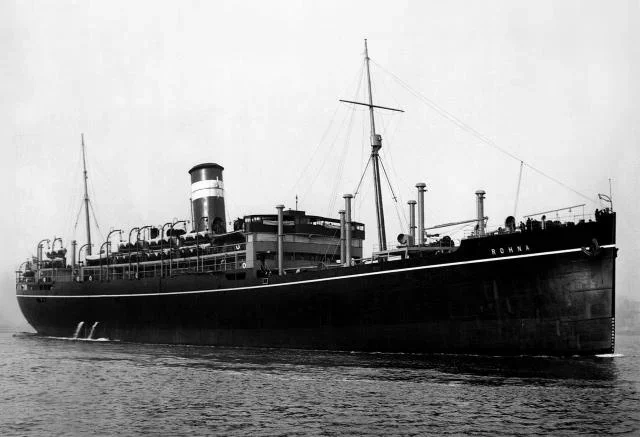
One of the least known events from World War II is the Germans’ sinking of the HMT Rohna. Unfortunately, it is also the most catastrophic.
On Thanksgiving Day 1943, the HMT Rohna set sail from North Africa as part of a 24-ship convoy heading to the China-Burma-India Theater. The ships would sail through an area of the Mediterranean Sea known for German attacks. On November 26, 1943, on their second day at sea, German bombers attacked the convoy in two separate waves, neither of which were successful. Just as the allied ships felt they were safe, a lone bomber returned, launching and steering a radio-guided missile straight into the side of the Rohna. It is estimated that 300 men were killed on impact, nearly all of them from the U.S. 853rd Engineer Aviation Battalion. An additional 957 died trying to get off the sinking ship or in the water waiting to be rescued. Of the 1,157 soldiers and crew that perished, 1,105 were U.S. soldiers. The sinking of the HMT Rohna remains the largest loss of American life at sea due to enemy action.
The Rohna was poorly equipped with life-saving equipment. The lifeboats that were damaged in the attack were rusted to their housing or collapsed when they were lowered. There were no life vests, only inflated life belts that were designed for amphibious maneuvers. The belts caused those wearing them to pitch forward into cold, oil-soaked water, resulting in their deaths.
The radio-guided missile used by the German bomber pilot was considered top-secret, so secret that this may have been one of the first, if not the first, times it was used against the United States. The War Department immediately (and indefinitely) classified the attack, ordering all of the 966 survivors not to talk or write home about the event under threat of court-martial. These survivors were forced to bury the painful story for the next fifty years. The families of the valiant soldiers who lost their lives did not know the circumstances under which their loved ones were killed.
Six of those families were from the Texas Panhandle. The soldiers whose names are engraved on the monoliths in the Memorial Garden are:
TEC5 Francis Lewis Englert – Deaf Smith County
PFC Bernardino S Espitia – Potter County
PVT Roy David Pyeatt – Potter County
CPL Alphus Ragsdale Roland – Potter County
TEC5 R. B. Waldrep – Hutchinson County
TEC5 Herbert John Weidenbenner – Castro County
All of these men were in the U.S. Army Air Force, and all but one, CPL Alphus Ragsdale Roland, were members of the 853rd Engineer Battalion, Aviation.
The tragic story of the HMT Rohna never made it to any history books because of its classification until 1996. The story is now public, and articles and books have been written documenting the catastrophic event. One book, by Carlton Jackson, is titled, Forgotten Tragedy: The Sinking of HMT Rohna. The Texas Panhandle War Memorial is honored to make sure that this tragedy is no longer forgotten and to always remember the five brave men from our area who lost their lives in the sinking of the HMT Rohna.